
Sarmale Chronicles
A brief interlude/crossover episode

The stars shone brightly over the dark road. The only sound was the hum of cars on the highway behind us, and the scratch of my suitcase wheels as Lena and I trekked down the hill to her village. The ruteira, a city-to-city van, had picked us up in Chisinau and dropped us off at Lena’s requested location, an intersection some 15km from the larger city at end of the route. And now we were walking, while Lena made calls to see if someone from her village could pick us up. It was the middle of the night—I checked my watch—5:45pm.
If you’re not reading my friend Lena’s Peace Corps blog, Serving Sarmale, you should be. She offers truly thoughtful insight into her life in Moldova and is an all-around excellent writer. I, in fact, was so inspired by her blog that a few weeks ago I flew to Chisinau to check it out for myself. Lena met me at the airport and we caught a bus to our hostel, then headed out to explore the evening.
We found a Christmas market and ice rink just a few blocks away, and split two varieties of glintwein and a cheese plăcintă.
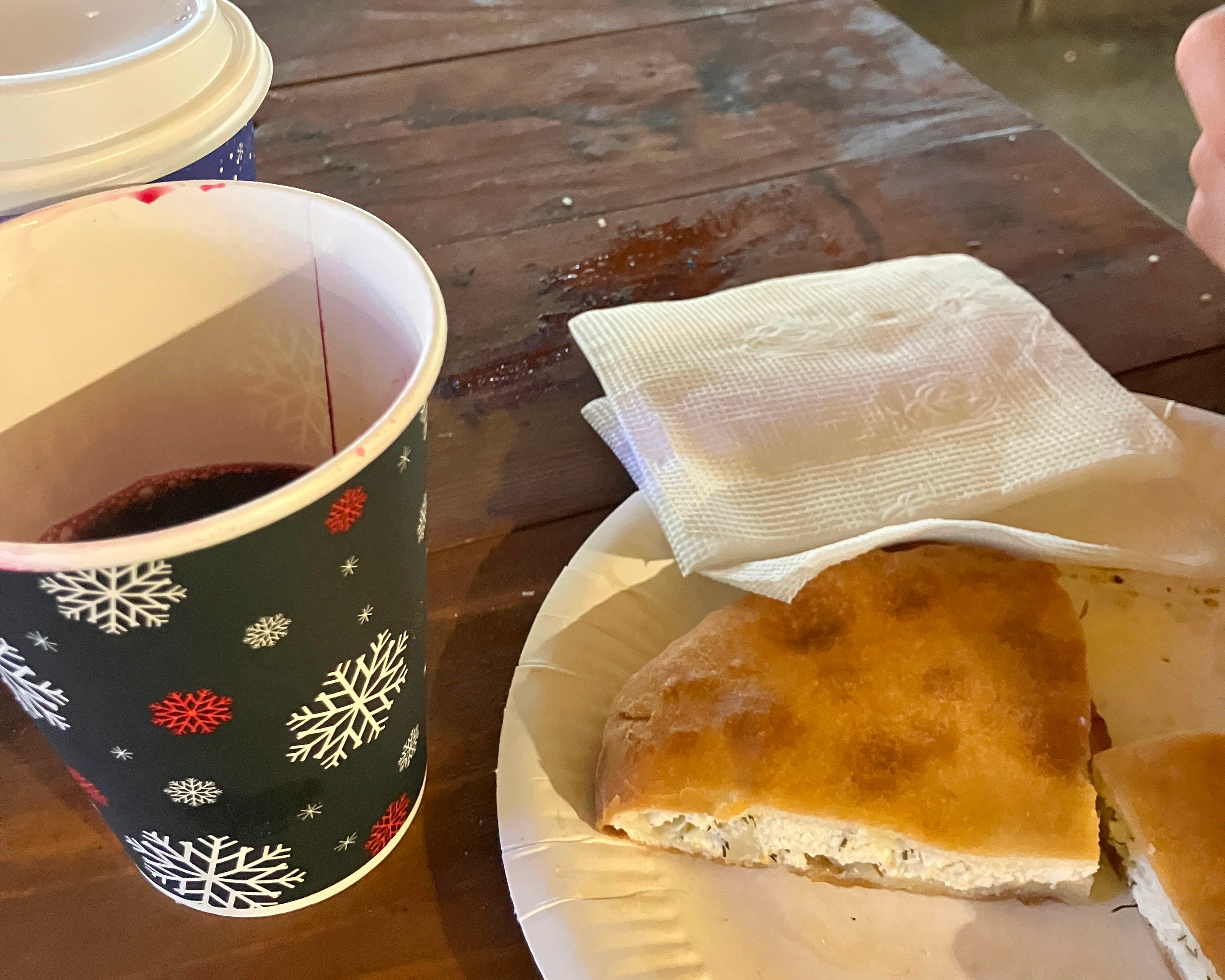
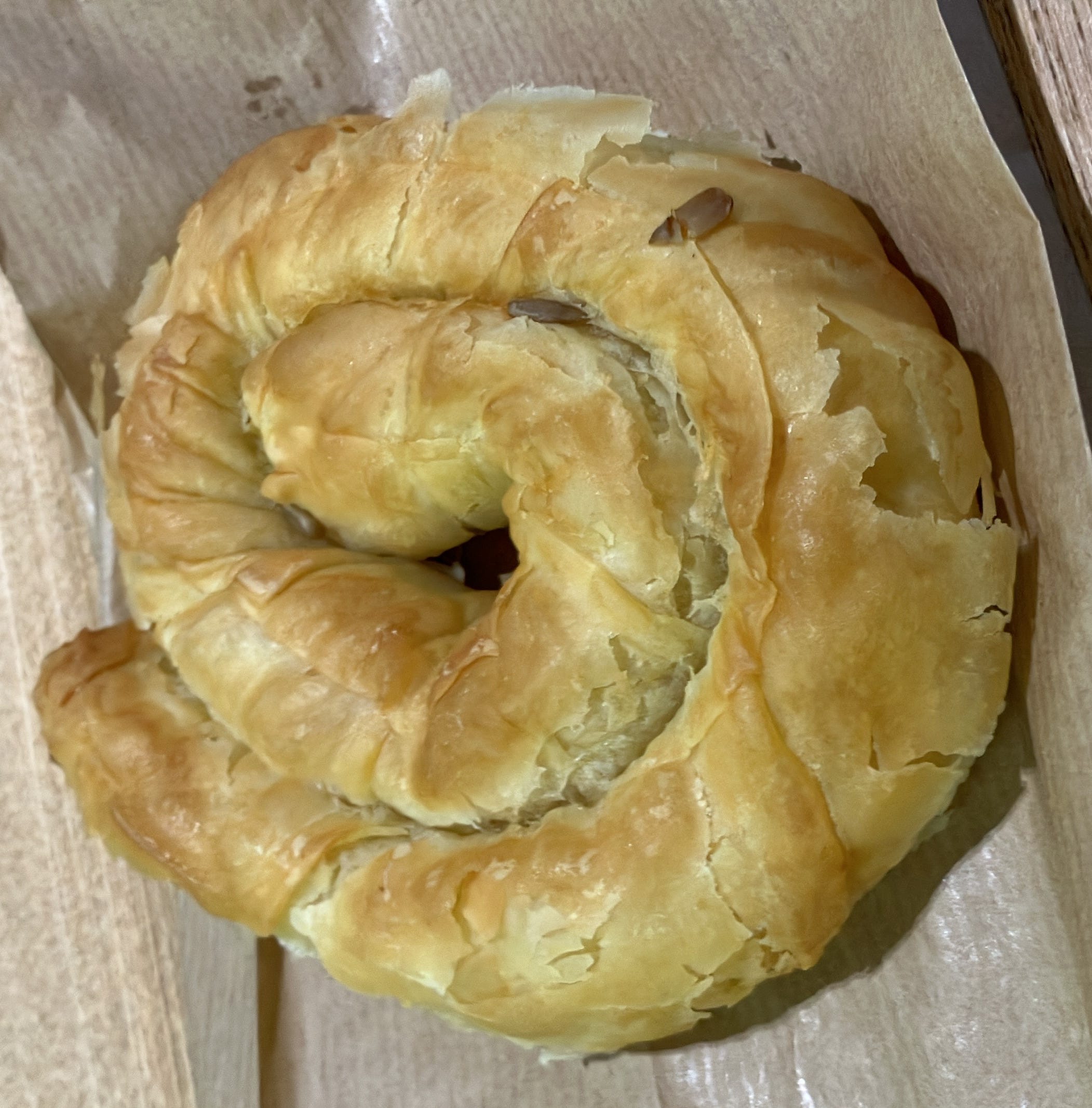
Plăcintă are Moldova’s answer to the samsa or the boureka, especially the spiral kind. The dough can be filled with meat, cheese, cabbage, or potato. It can be a thick hand-pie, a sort of fried packet, or a flaky spiral. Over the next four days, I would eat a total of perhaps 25 plăcintă, most of them made by Doamnă Mariana, Lena’s host mom, and all of them better and cheaper than the Christmas market variety.
The next morning, we got very fancy pumpkin lattes at a cafe, then checked out a craft fair and the ethnographic museum. We completed our wanderings with a bookstore, a vintage store, and lunch/dinner at an Italian restaurant. Chisinau, like Bishkek and Almaty, has a mix of early 1800s and Soviet architecture that is really cool.
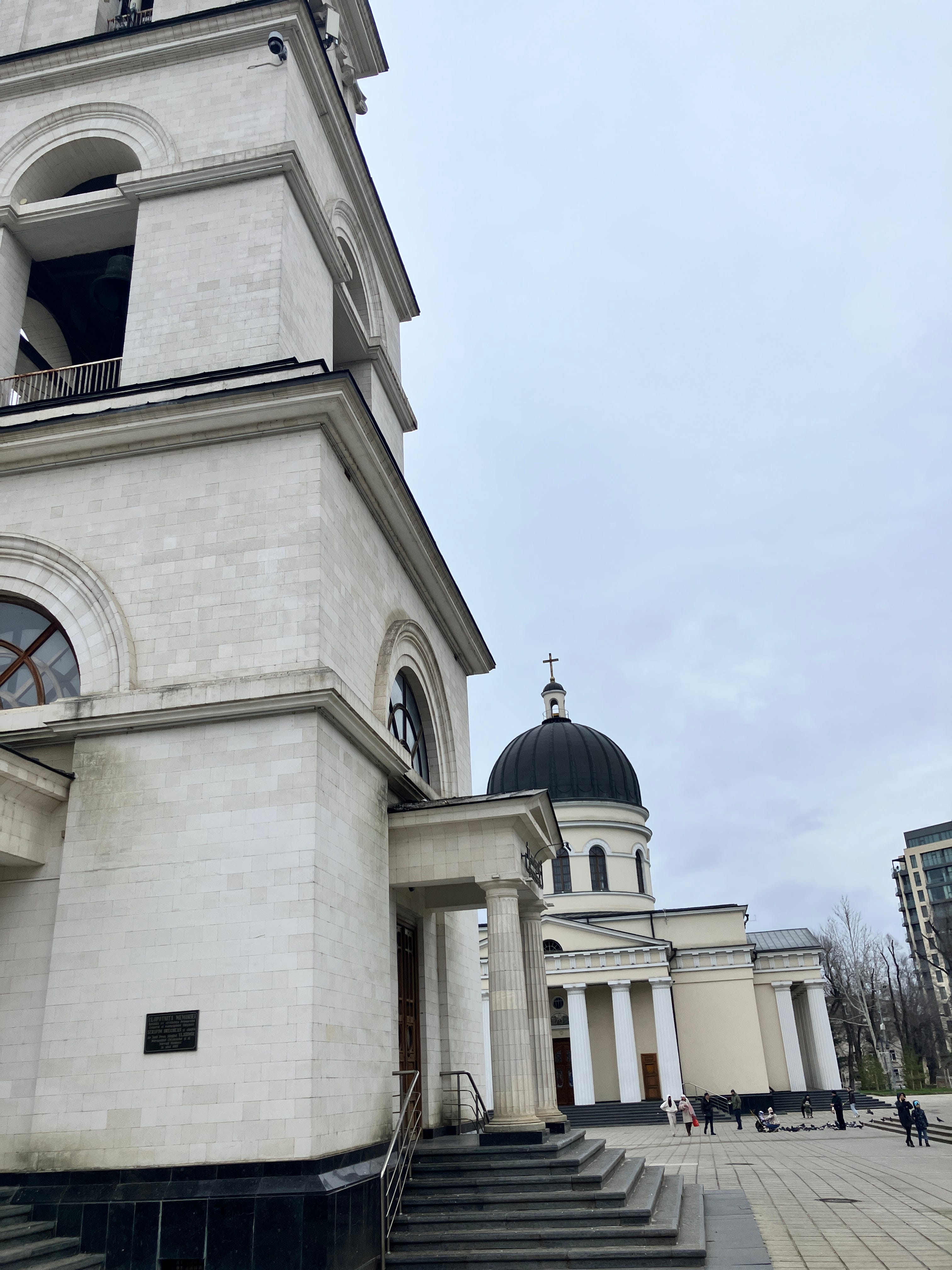
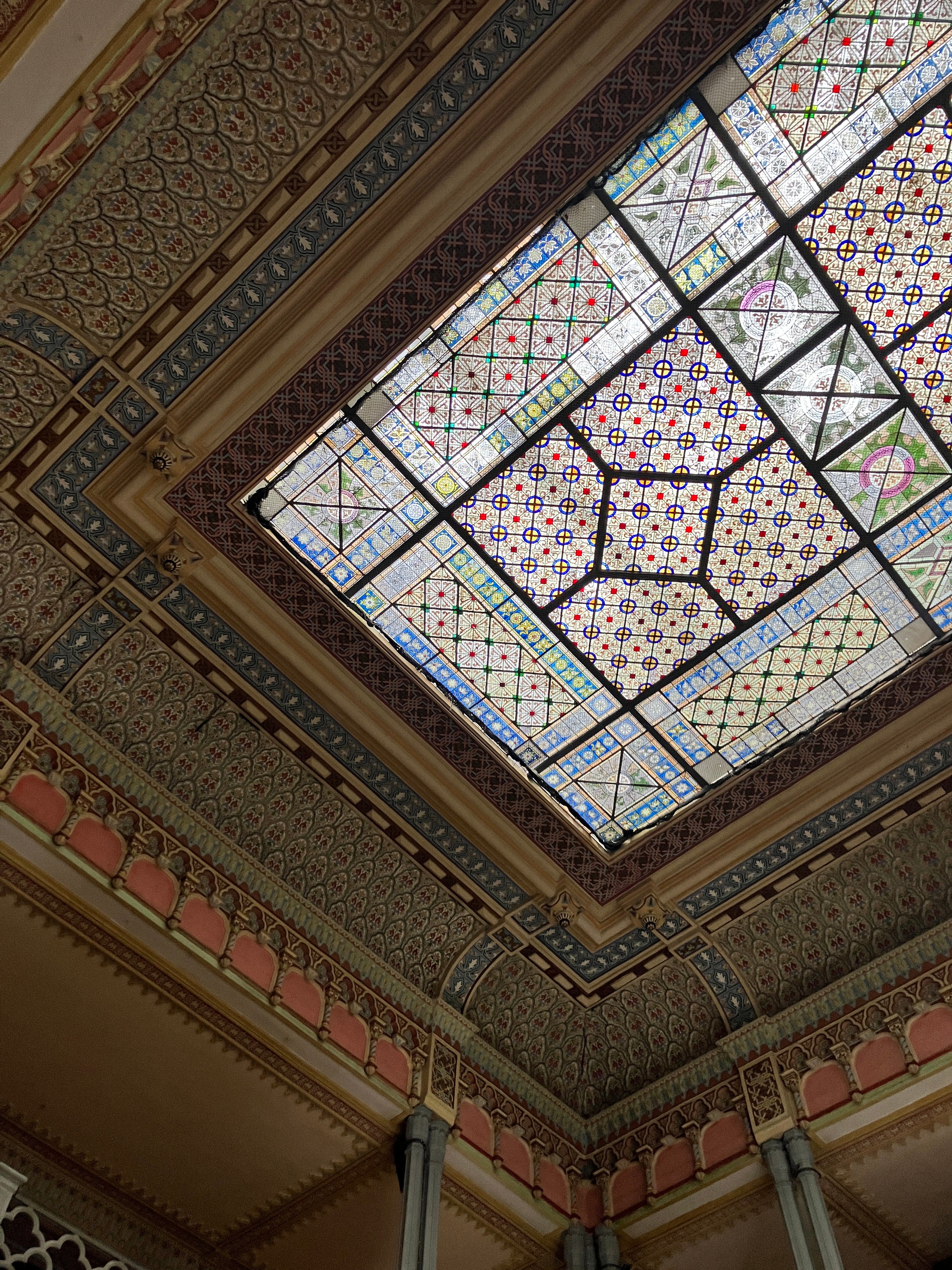
After linner, we collected our belongings and were waiting for a bus to take us to the ruteira pickup when I heard something. I’d know it anywhere: the candle lighting blessings. It was the first night of Hanukkah, and the public candle lighting was happening just down the street. We ran over and caught the third prayer—and then ran back for our bus.
On the ruteira, I answered a lot of questions in Russian for a very drunk man, even though the answer was almost always that I did not know: where we were, how far we were from our destination, how much longer it was going to be. I did know where his backpack was (on the seat behind him). It was something of a relief to get out of the van and start walking.
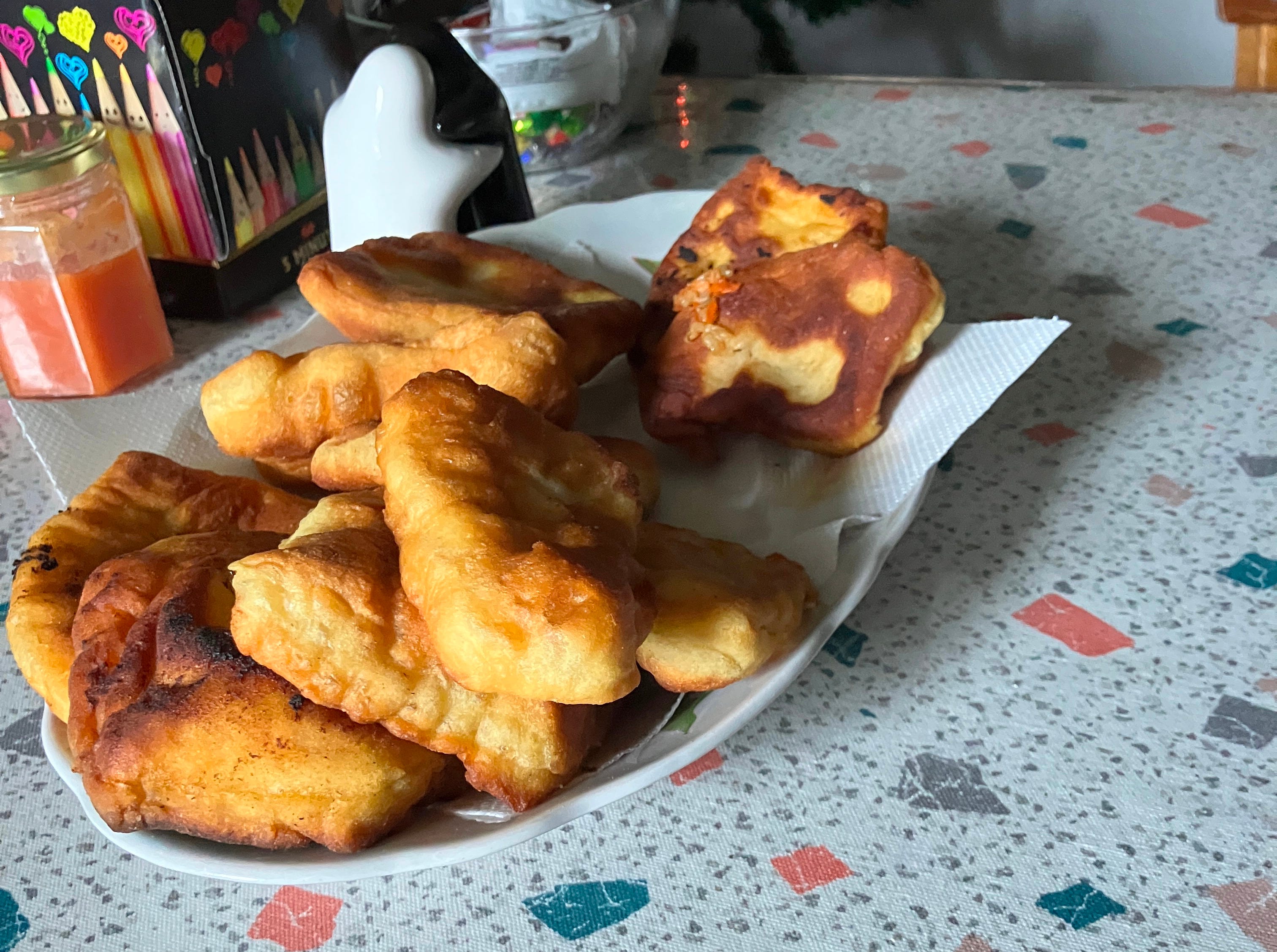
Eventually two teenage boys pulled over, tossed my suitcase in their trunk, and zoomed us up to Lena’s village at a breakneck pace, music blaring. 20 minutes later, we opened the gate to Lena’s host family’s home. We then ate more plăcintă, and I also got to try the famous sarmale (grape leaves stuffed with rice) that inspired the name of Lena’s blog.
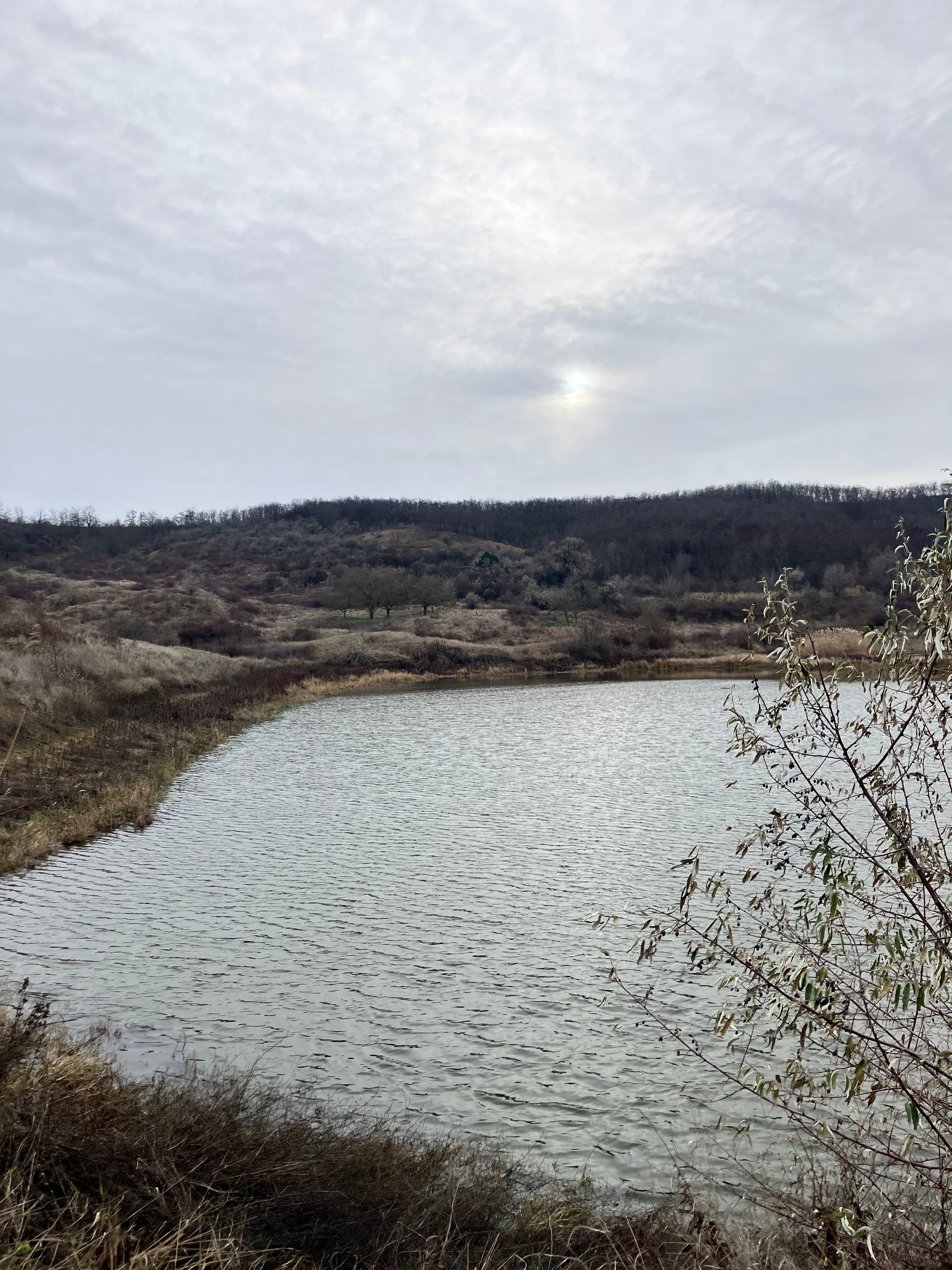
I spent the next day following Lena around as she interviewed community members about their dreams and goals for the village, ran an English club for teenagers at the library, watched said teenagers rehearse their Christmas carols and practice their Just Dance routines at the community center, and took me over to see a pond a little ways out of town, stopping to ask every person we ran into what they were doing. The Peace Corps day is never done. It was so interesting to see how different her job was to mine. I work pretty specific hours and pretty specific places. Living in a village of about 600, Lena is always The American, always on the clock. Of course, being Lena, she handles it all with aplomb.
Russian seems to be pretty widely spoken, although Romanian is definitely the main language. While I had a solid 5 words of Romanian from my study on the plane, I spoke Russian with Lena’s host family, the town librarian, the town accountant, many other municipal employees, some of the teenagers, and really anyone else that we encountered. I did find, however, that being a Romance language with lots of Russian loanwords, I was able to follow a basic conversation in Romanian by the end of my time in Lena’s village, which was really cool.
We spent that evening at the bar, which is a room behind the convenience/grocery store that was started with a grant a few years ago. One of Lena’s projects is talking to the entrepreneurs who started businesses with these grants. A lot of them were not successful, and Lena wants to figure out how the grants can better support people to start business that last.
The next day we woke up early and caught a ruteira to Orhei, a city of about 22,000 people an hour’s drive away. Lena asked around at the station for somewhere to put my suitcase, and we wound up storing it in the back room of a random store at the bus station—and buying a cheese plăcintă for the walk.
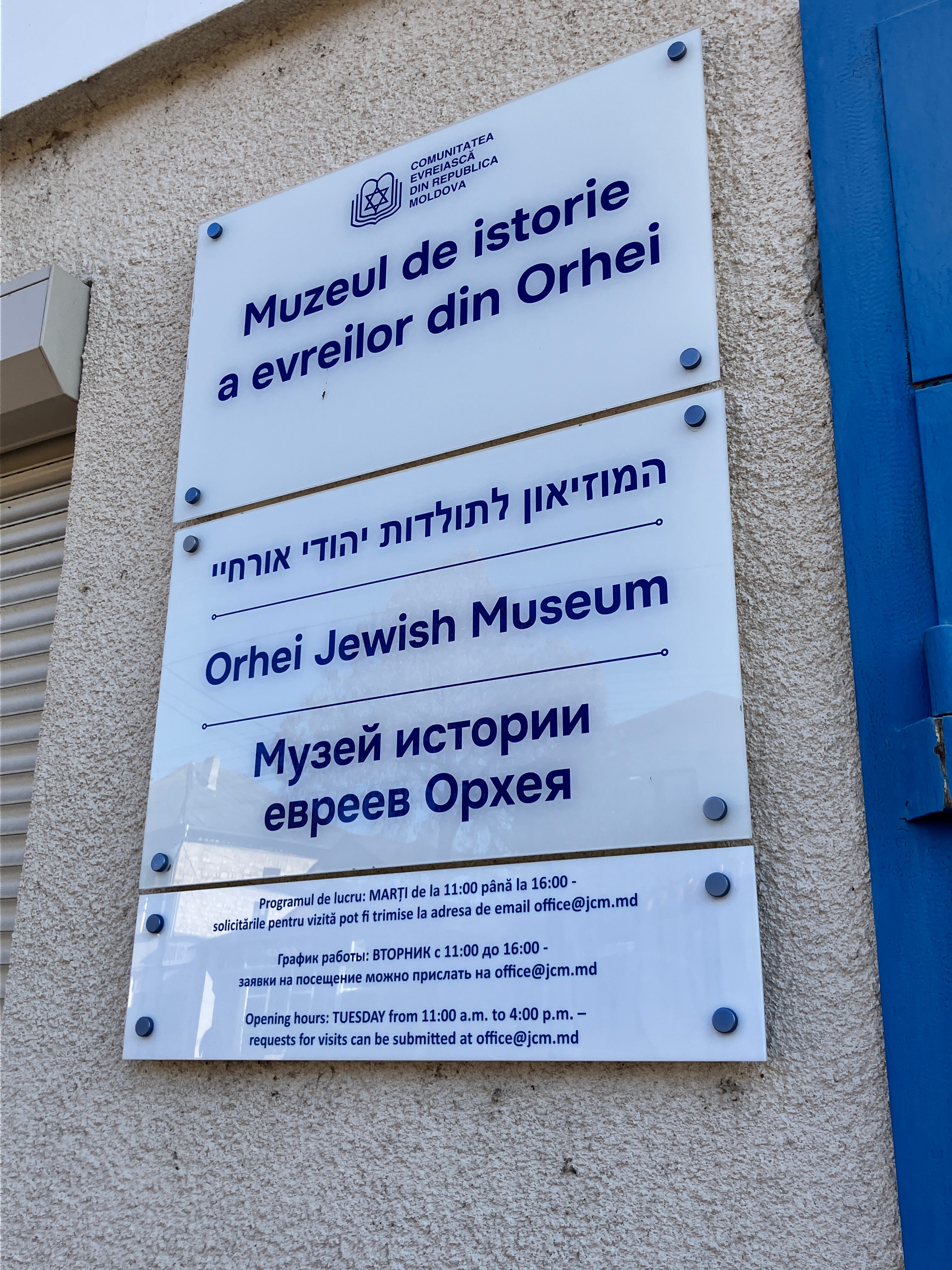
We started off by running some errands—things you can’t get in Lena’s village, and some extra warm socks for me—and then made an unsuccessful attempt to visit the Orhei Jewish museum, which apparently is not just open on Tuesdays from 11-4 but is in fact open Tuesdays from 11-4 by appointment only. Oh well. Soon enough, it was time to put me on a bus to Chisinau and for Lena to head home for English club.
I stopped by candle lighting again that night in Chisinau, where I ate a sufganiya filled with applesauce and pondered Chabad of Chisinau’s baffling decision to set off fireworks (everyone ducked). Then I ate some soup and went to bed, back at the same hostel.
In the morning, I wrapped up my little Moldovan escapade with a potato, spiral-shaped plăcintă from the airport, which was shockingly good. La revedere, Moldova!
So thrilled to hear about your time in Moldova😍😍😍
Continue to enjoy the culinary adventures.